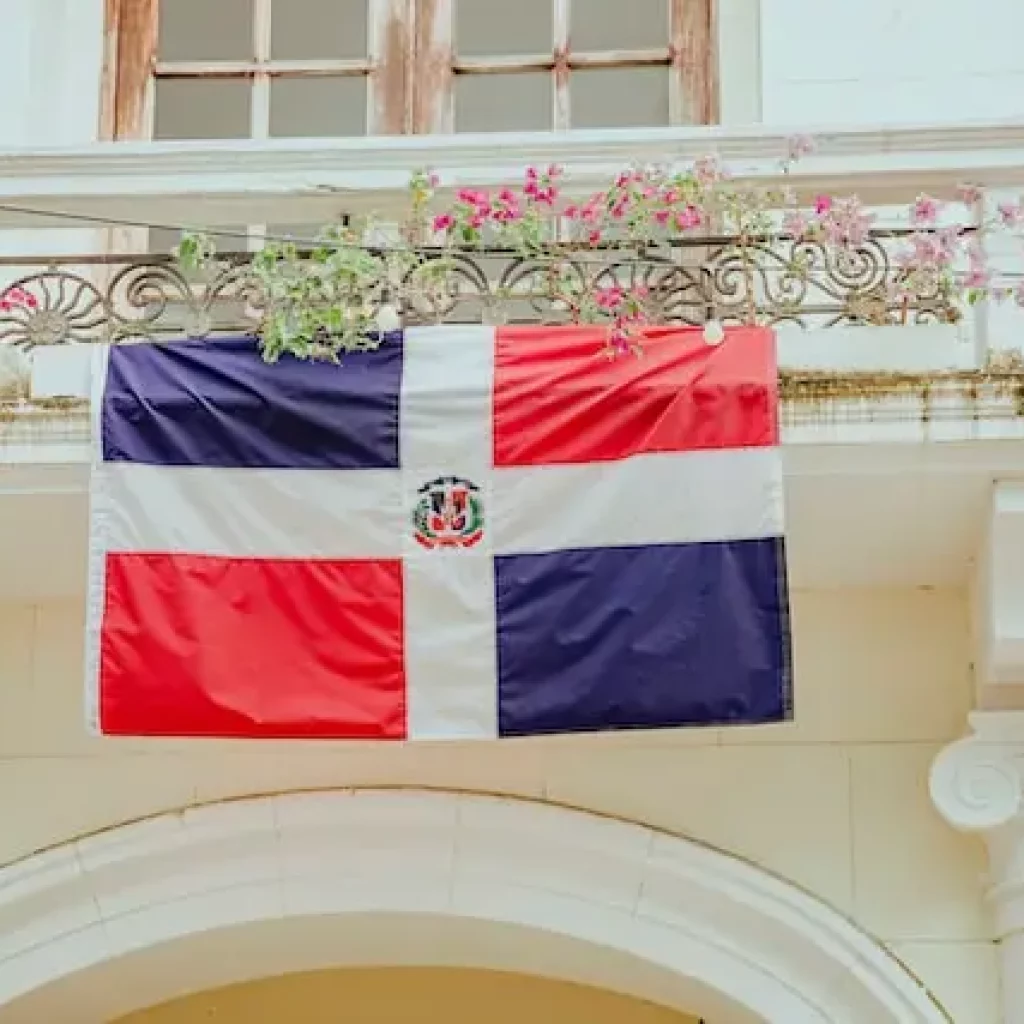
The Dominican Republic flag stands as one of the most distinctive national symbols in the world—the only flag on Earth featuring an open Bible at its center. The history of the Dominican Republic flag is rich with notions of freedom, faith, and independence. These themes remain just as relevant today as they were when revolutionaries first raised the flag on February 27, 1844. This comprehensive guide explores the flag’s fascinating history, the deep symbolism behind its colors and elements, and everything visitors and history enthusiasts should know about this powerful national emblem.
Quick Facts: Dominican Republic Flag
| Adoption Date | November 6, 1844 (Constitution) |
| First Raised | February 27, 1844 |
| Proportions | 5:8 (height to width) |
| Colors | Ultramarine Blue, Vermillion Red, White |
| Unique Feature | Only national flag with a Bible |
| Bible Verse | John 8:32 – “Y la verdad os hará libres” |
| Motto | Dios, Patria, Libertad (God, Homeland, Liberty) |
| Designers | Concepción Bona, María Trinidad Sánchez |
| Concept By | Juan Pablo Duarte |
Design & Symbolism of the Dominican Republic Flag
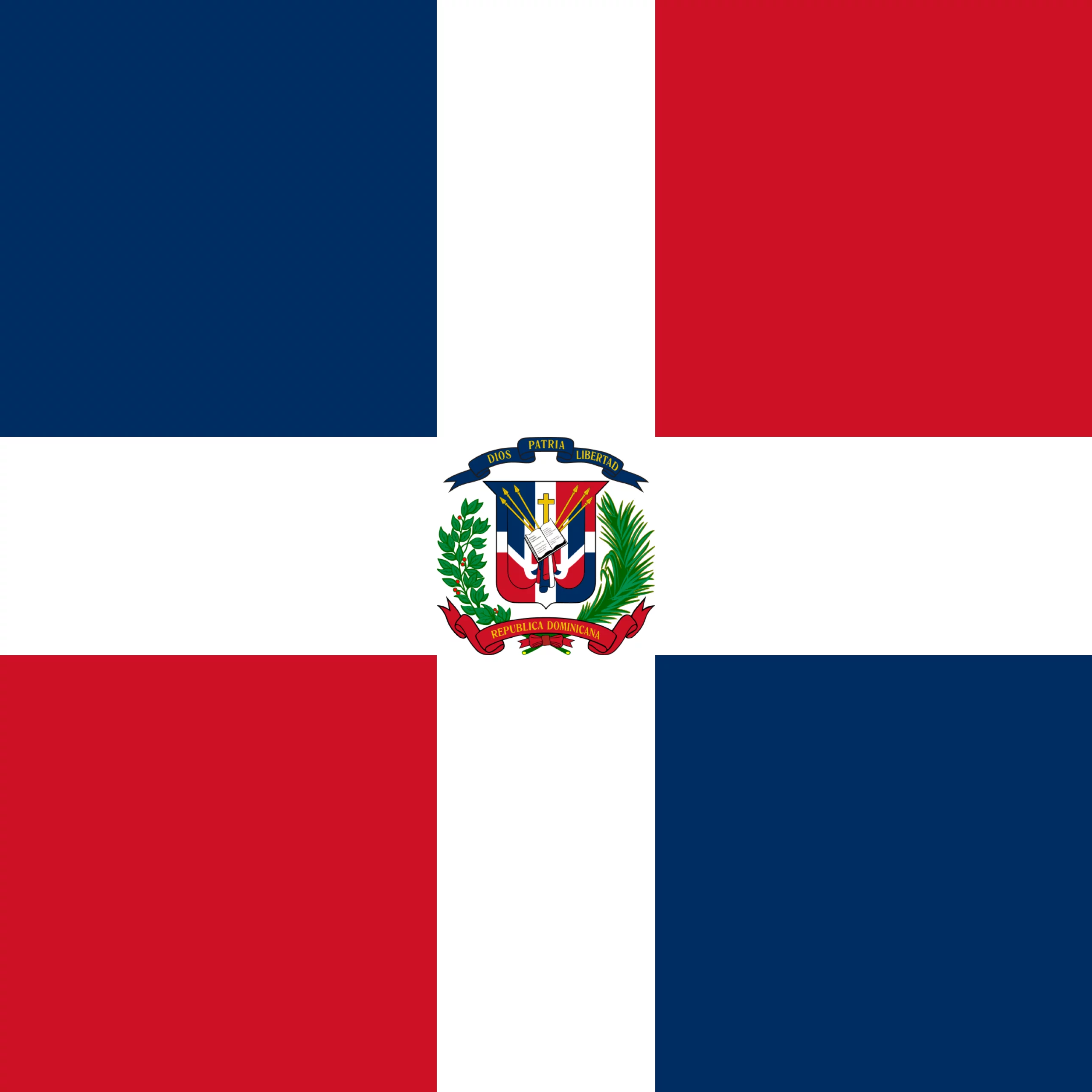
The Dominican Republic flag features a distinctive design that sets it apart from all other national flags. Four rectangles are arranged with a white cross in the center that stretches to the flag’s borders. The layout creates a quartered appearance that symbolizes the country’s Christian heritage and its struggle for independence.
Blue Rectangles – Liberty
The ultramarine blue rectangles represent liberty and freedom. This shade of blue was specifically chosen to evoke the Caribbean sky, reminding Dominicans that God watches over their nation. The blue appears in the upper left (hoist side) and lower right corners of the flag. Many Dominicans also associate this color with protection and the ideal of democratic governance.
Red Rectangles – Blood of Heroes
The vermillion red rectangles symbolize the blood shed by the heroes and martyrs who fought for Dominican independence. This powerful color honors those who sacrificed their lives during the struggle against Haitian occupation and serves as a reminder of the revolutionary spirit. The red appears in the upper right and lower left corners, creating a diagonal pattern with the blue.
White Cross – Salvation and Faith
The white cross stretching across the entire flag represents salvation, sacrifice, and the nation’s deep Catholic faith. Dominicans view this cross as a symbol of peace, unity, and their religious heritage. The founders of La Trinitaria specifically included the cross to reflect the Christian principles upon which they wanted to build their new nation.
Notable Figures in the Creation of the Dominican Republic Flag
The Dominican Republic flag emerged from the efforts of several patriotic figures who risked their lives for independence. Understanding these heroes provides insight into why the flag carries such profound meaning for Dominicans today.
Juan Pablo Duarte – Father of the Nation
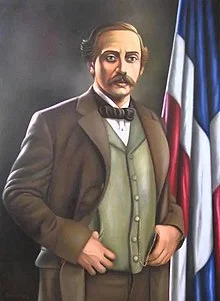
Juan Pablo Duarte conceived the original ideas about freedom that gave birth to both the nation and its flag. As the principal founder of La Trinitaria, the secret society that organized the independence movement, Duarte envisioned a free Dominican Republic separate from Haitian rule. Although authorities exiled him to Caracas the year before the revolution, his vision shaped every element of the flag’s design. Today, Dominicans honor him as the “Father of the Nation” (Padre de la Patria).
Concepción Bona – Principal Designer
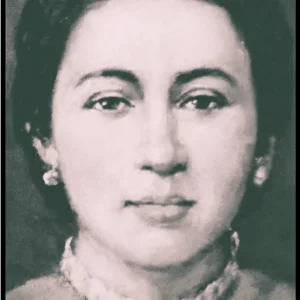
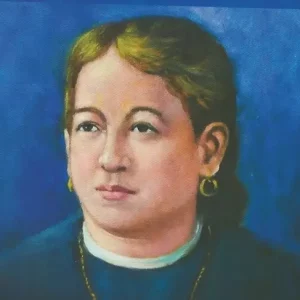
Concepción Bona, a nursery school teacher and patriot, served as the principal designer of the first Dominican flag. Working alongside her cousin María de Jesús Pina and freedom fighter María Trinidad Sánchez, Bona transformed Duarte’s vision into the physical flag that would represent the new nation. Her needle and thread created the symbol that Dominicans would rally around for generations.
María Trinidad Sánchez – Revolutionary Seamstress
María Trinidad Sánchez helped sew the first flag and later became one of the revolution’s most celebrated martyrs. After the Dominican Republic gained independence, she continued fighting for the cause until Spanish authorities captured and executed her in 1845. Her sacrifice made her a symbol of Dominican patriotism, and her memory remains intertwined with the flag she helped create.
Francisco del Rosario Sánchez – The Man Who Raised the Flag
When authorities exiled Duarte, Francisco del Rosario Sánchez stepped in as leader of the independence movement. On the night of February 27, 1844, Sánchez hoisted the new Dominican flag at the Puerta del Conde (Count’s Gate) in Santo Domingo and proclaimed the nation’s independence. This moment marked the birth of the Dominican Republic and established the flag as its most sacred symbol.
Historical Timeline of the Dominican Republic Flag
The Dominican flag’s history reflects the country’s tumultuous journey from colonization to independence. Understanding this timeline helps visitors appreciate the flag’s significance.
| 1492 | Christopher Columbus claims Hispaniola for Spain; Spanish colonial flags fly over the island |
| 1822 | Haiti conquers the eastern part of Hispaniola; Haitian flag flies over Santo Domingo |
| July 16, 1838 | Juan Pablo Duarte founds La Trinitaria, the secret society that would create the independence movement |
| February 27, 1844 | Dominican War of Independence begins; first flag raised at Puerta del Conde |
| February 28, 1844 | First official day of the Dominican Republic; flag flies over a free nation |
| November 6, 1844 | First Constitution establishes the flag design officially |
| 1861-1865 | Spanish Reconquest; flag temporarily replaced during annexation |
| 1865 | Restoration War restores independence and the flag |
| 1908 | Coat of arms standardized to current design |
| 1913 | Official flag proportions (5:8) established by law |
What Makes the Dominican Republic Flag Unique?
The Dominican Republic flag holds several distinctions that set it apart from every other national flag in the world:
The Only Flag with a Bible
The Dominican Republic is the only country in the world whose national flag displays an open Bible. This unique element appears in the coat of arms at the flag’s center, making it immediately recognizable among world flags. The Bible is opened to John 8:32, which reads: “Y la verdad os hará libres” (And the truth shall set you free). This verse reflects the founders’ belief that truth and faith would guide their new nation toward lasting freedom.
The Significance of John 8:32
The choice of John 8:32 was deliberate. The founding fathers believed that only through truth—truth about their identity, their rights, and their faith—could the Dominican people achieve and maintain freedom. The verse connects the nation’s political aspirations with its spiritual foundation, making the flag both a patriotic and religious symbol.
Different from the Haitian Flag
While both flags share the island of Hispaniola, the Dominican and Haitian flags are distinctly different. The Dominican flag uses blue and red with a white cross, while the Haitian flag features horizontal blue and red stripes. La Trinitaria specifically designed the Dominican flag to distinguish the new nation from Haiti, incorporating the white cross to emphasize Christian values and the quartered design to represent a fresh start.
The Coat of Arms
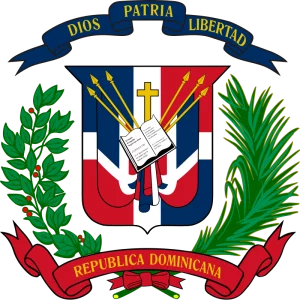
The Dominican Republic coat of arms sits at the center of the national flag and contains rich symbolism. According to the Constitution, each element carries specific meaning:
- Open Bible – The word of God and source of truth, open to John 8:32
- Gold Cross – Above the Bible, representing Christian faith and sacrifice
- Six Spears – Three on each side, representing the defense of the nation
- Laurel Branch – On the left side, symbolizing victory and glory
- Palm Branch – On the right side, representing peace and freedom
- Blue Ribbon (top) – Displays the motto “Dios, Patria, Libertad” (God, Homeland, Liberty)
- Red Ribbon (bottom) – Bears the inscription “República Dominicana”
The coat of arms uses the same blue, red, and white colors as the flag, creating visual harmony and reinforcing the national identity.
Flag Protocol & Etiquette
Dominicans take their flag seriously, and specific protocols govern how it should be displayed and honored:
Display Guidelines
- The flag should be raised at sunrise and lowered at sunset
- When displayed vertically, the blue rectangle should be in the upper left
- The flag should never touch the ground or floor
- Worn or damaged flags should be respectfully retired
- During mourning, the flag is flown at half-staff
Important Flag Days
- February 27 – Independence Day (most important flag display day)
- August 16 – Restoration Day
- November 6 – Constitution Day
- January 26 – Duarte Day (honoring Juan Pablo Duarte)
During these national holidays, you’ll see Dominican flags displayed on buildings, cars, homes, and throughout public spaces. Many Dominicans dress in the national colors to show their patriotism.
Where to See the Flag in Punta Cana
Visitors to Punta Cana and the Dominican Republic can see the national flag at numerous locations:
- Puerta del Conde (Santo Domingo) – The historic gate where the flag was first raised; a must-visit for history enthusiasts
- Plaza de la Bandera (Santo Domingo) – Flag Plaza, featuring an enormous Dominican flag
- Punta Cana International Airport – Multiple flags greet arriving visitors
- Resort Properties – Most hotels display the national flag prominently
- Local Businesses – Restaurants, shops, and tour operators proudly display their flag
- Beach Vendors – Flag-themed souvenirs and merchandise are popular with tourists
Consider visiting during Independence Day (February 27) or Restoration Day (August 16) to experience the full display of national pride, complete with parades, music, and flag-waving celebrations.
Historical Flags of the Dominican Republic
The Dominican Republic’s long colonial history brought several flag variations, each reflecting different periods of rule and political change.
The Cross of Burgundy (1492-1821)
When Spain colonized the Dominican Republic in the early 16th century, it marked the beginning of the Spanish colonial period. Spaniards used the flag of the Captaincy General of Santo Domingo, known as the Cross of Burgundy. This flag had a white background with a red saw-toothed cross in the shape of an “X,” inspired by the Cross of Saint Andrew, patron saint of Burgundy.
Flag During Haitian Occupation (1822-1844)
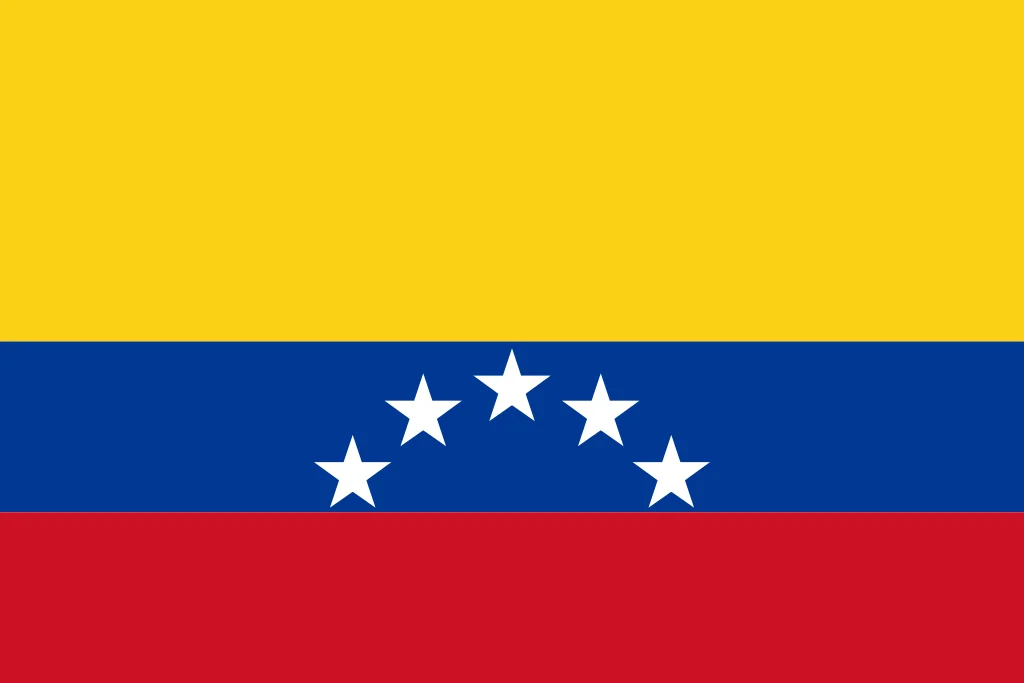
In 1822, after Haiti gained independence, Haitian forces occupied the eastern side of the island. During this 22-year period, the Haitian flag flew over Santo Domingo. This occupation directly motivated the independence movement and the creation of a distinctly Dominican flag.
Early Flag of La Trinitaria
The revolutionary group La Trinitaria created an early version of the Dominican flag by modifying the Haitian flag. They added a white cross at the center to reflect their Christian heritage. This cross, along with stars placed on the edges, made the flag a precursor to the official Dominican Republic flag we know today.
The Flag on Dominican Independence Day
Every year on February 27, Dominicans celebrate Independence Day with parades, music, and displays of the national flag. In Santo Domingo, the military parade along Washington Avenue showcases the Dominican Republic flag in full prominence. Citizens dress in red, blue, and white, proudly waving their flags throughout the day.
During the festivities, you will hear the “Himno Nacional” (National Anthem), known as Quisqueyanos Valientes (“Brave Quisqueyans”). This anthem reinforces the patriotic spirit tied to the Dominican Republic flag, calling on citizens to remember their ancestors’ sacrifices.
Frequently Asked Questions
Why is there a Bible on the Dominican Republic flag?
The Bible on the Dominican flag represents the nation’s Christian foundation and the founders’ belief that truth and faith would guide the country toward freedom. The Bible is opened to John 8:32: “And the truth shall set you free.” This makes the Dominican Republic the only country in the world with a Bible on its national flag.
What do the colors of the Dominican Republic flag mean?
Blue represents liberty and the protection of God. Red symbolizes the blood of heroes who fought for freedom. The white cross represents salvation, sacrifice, and the Dominican people’s Christian faith.
When was the Dominican Republic flag created?
The flag was first raised on February 27, 1844, when the Dominican Republic declared independence from Haiti. The Constitution of November 6, 1844, officially established the flag design.
Who designed the Dominican flag?
Concepción Bona and María Trinidad Sánchez physically designed and sewed the first flag, while Juan Pablo Duarte conceived the original idea as part of the independence movement.
What verse is on the Dominican flag?
The Bible on the flag is opened to John 8:32, which reads: “Y la verdad os hará libres” (And the truth shall set you free). This verse was chosen to represent the connection between truth, faith, and freedom.
What does the coat of arms mean?
The coat of arms features an open Bible with a gold cross (faith), laurel branch (victory), palm branch (peace), six spears (defense), and ribbons displaying the national motto “Dios, Patria, Libertad” and the country name.
Is the Dominican flag similar to Haiti’s flag?
No. While both countries share the island of Hispaniola, their flags are distinctly different. The Dominican flag has a white cross creating four blue and red rectangles, while the Haitian flag has horizontal blue and red stripes. The Dominican founders specifically designed their flag to distinguish their new nation from Haiti.
What are the exact proportions of the flag?
The official proportions are 5:8 (height to width). This ratio was established by law in 1913 to standardize all official flag displays.
What is the Dominican flag motto?
The national motto is “Dios, Patria, Libertad” (God, Homeland, Liberty). This motto appears on the blue ribbon above the coat of arms and represents the three pillars of Dominican national identity.
When is Dominican Flag Day?
The most important flag-related holiday is Independence Day on February 27, when the flag was first raised. Other significant days include Restoration Day (August 16), Constitution Day (November 6), and Duarte Day (January 26).
Can I buy a Dominican flag as a souvenir?
Yes! Dominican flags and flag-themed merchandise are popular souvenirs throughout Punta Cana and the Dominican Republic. You can find them at tourist shops, beaches, airports, and local markets.
Who was Juan Pablo Duarte?
Juan Pablo Duarte is considered the “Father of the Nation” (Padre de la Patria). He founded La Trinitaria, the secret society that organized Dominican independence, and conceived the vision for the national flag. His image appears on Dominican currency and monuments throughout the country.
Frequently Asked Questions
Why is there a Bible on the Dominican Republic flag?
The Bible on the Dominican flag represents the nation's Christian foundation and the founders' belief that truth and faith would guide the country toward freedom. The Bible is opened to John 8:32: 'And the truth shall set you free.' This makes the Dominican Republic the only country in the world with a Bible on its national flag.
What do the colors of the Dominican Republic flag mean?
Blue represents liberty and the protection of God. Red symbolizes the blood of heroes who fought for freedom. The white cross represents salvation, sacrifice, and the Dominican people's Christian faith.
When was the Dominican Republic flag created?
The flag was first raised on February 27, 1844, when the Dominican Republic declared independence from Haiti. The Constitution of November 6, 1844, officially established the flag design.
Who designed the Dominican flag?
Concepción Bona and María Trinidad Sánchez physically designed and sewed the first flag, while Juan Pablo Duarte conceived the original idea as part of the independence movement.
What verse is on the Dominican flag?
The Bible on the flag is opened to John 8:32, which reads: 'Y la verdad os hará libres' (And the truth shall set you free). This verse was chosen to represent the connection between truth, faith, and freedom.
What does the coat of arms mean?
The coat of arms features an open Bible with a gold cross (faith), laurel branch (victory), palm branch (peace), six spears (defense), and ribbons displaying the national motto 'Dios, Patria, Libertad' and the country name.
Is the Dominican flag similar to Haiti's flag?
No. While both countries share the island of Hispaniola, their flags are distinctly different. The Dominican flag has a white cross creating four blue and red rectangles, while the Haitian flag has horizontal blue and red stripes.
What are the exact proportions of the flag?
The official proportions are 5:8 (height to width). This ratio was established by law in 1913 to standardize all official flag displays.
What is the Dominican flag motto?
The national motto is 'Dios, Patria, Libertad' (God, Homeland, Liberty). This motto appears on the blue ribbon above the coat of arms and represents the three pillars of Dominican national identity.
When is Dominican Flag Day?
The most important flag-related holiday is Independence Day on February 27, when the flag was first raised. Other significant days include Restoration Day (August 16), Constitution Day (November 6), and Duarte Day (January 26).
Can I buy a Dominican flag as a souvenir?
Yes! Dominican flags and flag-themed merchandise are popular souvenirs throughout Punta Cana and the Dominican Republic. You can find them at tourist shops, beaches, airports, and local markets.
Who was Juan Pablo Duarte?
Juan Pablo Duarte is considered the 'Father of the Nation' (Padre de la Patria). He founded La Trinitaria, the secret society that organized Dominican independence, and conceived the vision for the national flag.