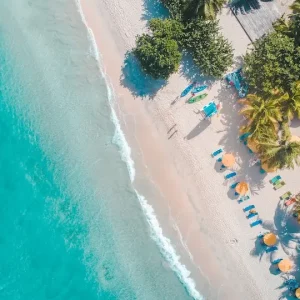
The world-famous resort town of Punta Cana lies on the eastern coast of the Dominican Republic, nestled in the heart of the Caribbean region. This tropical paradise in Latin America is known for its crystal-clear turquoise waters, swaying palm trees, colorful coral reefs, and miles of pristine beaches with white sand coastlines.
You might’ve heard of Punta Cana before, but are you familiar with the story behind its name? What does it mean? If you find yourself wondering about Punta Cana’s origins and seeking some interesting facts, then this guide is for you.
In This Guide
What Does Punta Cana Mean?
To understand the meaning of Punta Cana, let’s break it down. In Spanish, “Punta” translates to tip or point. The word “Cana” comes from the white palm trees found abundantly in the area. So, Punta Cana means “Tip of the White Cane Palms.” This name refers to its geographical location at the easternmost tip of the Dominican Republic, where it meets the Atlantic Ocean and the Caribbean Sea.
If you have a map, you’ll see that the town of Punta Cana is indeed situated at the sharpest point, jutting out into the azure waters. The white cane palms that give Punta Cana its name are an integral part of the local culture. They’re often used for making the roofs of native houses, providing shelter from the direct sunlight typical of the northern tropics.
How It Got Its Name
Is Punta Cana the original name of this famous destination? Actually, it took many years before this renowned town got the name that it’s known for today.
Yauya
Taino Indians were among the first to occupy the land where Punta Cana is situated. They named the place “Yauya,” one of the first-ever names, which remained unchanged for many years. Interestingly, Yauya is also the name of an underground river found in the same region that forms 12 freshwater lagoons.
Punta Borrachón
Punta Borrachón is another one of the earliest names. The locals gave the town this name, which translates to “Cape Drunkard” or “Drunkard’s Point.” At present, you can still see the name Punta Borrachón on some old maps of the Dominican Republic.
Punta Cana
Everything changed in 1971 when a Dominican businessman named Frank R. Rainieri and a New York attorney named Theodore W. Kheel joined forces to develop the area. They planned to build a vacation resort that would accommodate tourists from all over the world. While deciding on a name, they found it difficult to pronounce Yauya. They also thought that Punta Borrachón was a derogatory and uncommercial name.
Thus, they decided to rename the place “Punta Cana” upon seeing the surrounding cane palm trees with fan-shaped leaves. The name quickly spread as the town became a world-renowned tourist destination. To this day, the original Puntacana Resort & Club still stands. It has since grown in size and now occupies 26 square miles.
History and Development
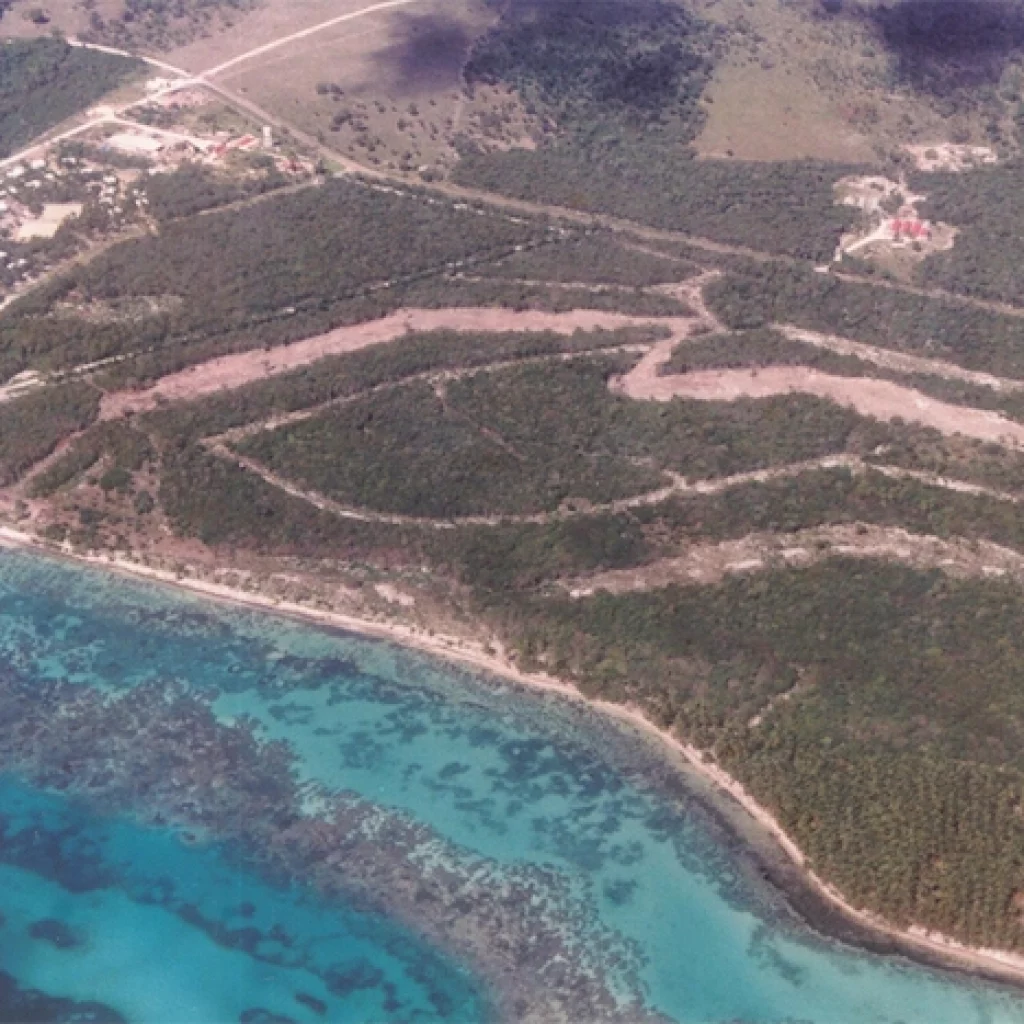
Punta Cana used to be an inaccessible location with nothing but bushes and dense jungles. There were no roads or any mode of transport in the area. You could only see a few small fishing villages scattered along the coast. However, it had stunningly beautiful white sand beaches, palm trees, coral reefs, and clear waters.
This is what caught the attention of some American investors who bought miles of untouched land in 1969. Frank R. Rainieri and Theodore W. Kheel managed the said group of investors. They began by building a small hotel called Punta Cana Club, marking the beginning of tourism development in the area.
Transportation in Punta Cana
In spite of the initial development, Punta Cana was still quite isolated. Punta Cana’s closest town, Higüey, was 6 hours away. It was during this time that the Colgate-Palmolive Company decided to get involved in constructing a new road for the town.
Punta Cana was also difficult to reach by plane. It took 4 hours to get to the nearest airport in Santo Domingo. As a result, Rainieri, Kheel, and other representatives began work on building the Punta Cana International Airport. It took 8 years for them to gain authorization from the government to start construction. The airport opened in 1984.
Tourism in Punta Cana
With its transportation system fully in place, Punta Cana started accepting more visitors. Soon after, more facilities were built. These included waterworks, waste disposal, security services, electric connections, employee communities, medical facilities, and schools.
The development of Punta Cana has been remarkable, with the airport now handling more passengers than any other airport in the Caribbean. From then until today, Punta Cana remains a top tourist attraction, drawing visitors from all over the world to experience its activities and world-class beaches.
Frequently Asked Questions
What does Punta Cana mean in English?
Punta Cana means “Tip of the White Cane Palms” in English. “Punta” means point or tip in Spanish, and “Cana” refers to the white cane palm trees (Sabal causiarum) that are native to the region and still grow abundantly there today.
When was Punta Cana founded?
Punta Cana’s development began in 1969 when investors purchased the land. The first hotel opened in 1971, and the Punta Cana International Airport opened in 1984. Before this, the area was largely uninhabited jungle and coastline with only small fishing villages.
Who founded Punta Cana?
Frank R. Rainieri (a Dominican businessman) and Theodore W. Kheel (a New York attorney) are credited with founding modern Punta Cana. They led the group of investors who transformed the remote jungle into the world-class resort destination it is today.
What was Punta Cana called before?
Before 1971, the area was known by two names: “Yauya” (the original Taino Indian name) and “Punta Borrachón” (meaning “Drunkard’s Point” in Spanish). The developers renamed it Punta Cana because the old names were either hard to pronounce or uncommercial.
Is Punta Cana a city or a resort?
Punta Cana is technically a resort town, not an official city. It’s located in the municipality of Higüey in La Altagracia Province. The area is primarily composed of resorts, hotels, and tourist facilities rather than a traditional urban center.
Why is Punta Cana so popular?
Punta Cana is popular because of its 30+ miles of pristine white sand beaches, warm weather year-round, crystal-clear Caribbean waters, world-class all-inclusive resorts, and the busiest airport in the Caribbean making it easily accessible from North America and Europe.
Wrapping Up
So, now you know what Punta Cana means and the fascinating story behind its name. It’s truly captivating to learn about the town’s many names and how it evolved into the attractive tourist destination it is today. Who knew that this tropical paradise had such a rich history behind it?
Punta Cana has definitely come a long way from its humble beginnings as a remote and undeveloped land area. Today, it stands as a shining jewel in the Caribbean, offering visitors a perfect blend of natural beauty and modern amenities. The next time you visit this captivating spot, remember the story behind its famous name and appreciate the journey it has taken to become one of the most beloved destinations in Latin America.